Gender Norms Intersected with other Social Factors in Theater History
Various social factors such as race, class, and/or etc intertwined with gender norms have an immense impact on theater history.
As time passed and women were allowed to perform, gender norms along with class played a major role in what they were allowed to perform in. Women in higher classes still had certain expectations when playing certain roles. They had to show respect and morality to other male actors or higher ups no matter the circumstance. These traits shown in theater show up in societal gender norms of the higher/middle classes as well. Disrespecting and not catering to men's needs are shown as a parallel in the roles women were allowed to play and what women actually went through of the time. According to Ann M. Mazur, This scene in midst of home theatrical "Romantic Caroline" draws attention to Caroline's feelings of inadequacy as a wife—precisely speaking, how living as a "true wife" means being "a drudge, a helpmate" rather than a woman who indulges in romantic fantasies in which she is not trapped in marriage, as Caroline now is, to a confectioner husband named Spriggs with creaky boots and a passion only for biscuits. Her actions—smothering her husband with sofa cushions while placing him a bit too close to the heat—place her in a position of power while revealing she believes little in the bliss of playing "helpmate" to her husband." Mazur shows that the actions of the character Caroline is a parallel to the stereotypical gender roles of what high/middle class women are expected to do at the time. Rather than putting their own needs first, women were expected to put the needs of their husband/children/family first.
 |
Victorian Lower-Class Family Google image result for https://c8.alamy.com/comp/2m3jwjm/bustling-london-street-scene-showing-people-fetching-their-sunday-dinners-and-roasts-from-a-smiths-bakery-many-lower-class-households-did-not-possess-ovens-during-the-victorian-era-but-could-take-a-ready-prepared-loaf-or-joint-to-a-local-bakers-to-be-cooked-instead-date-1873-2m3jwjm.jpg. alamy. (n.d.). https://share.google/images/snTYMb3zrJUyGZ1TZ |
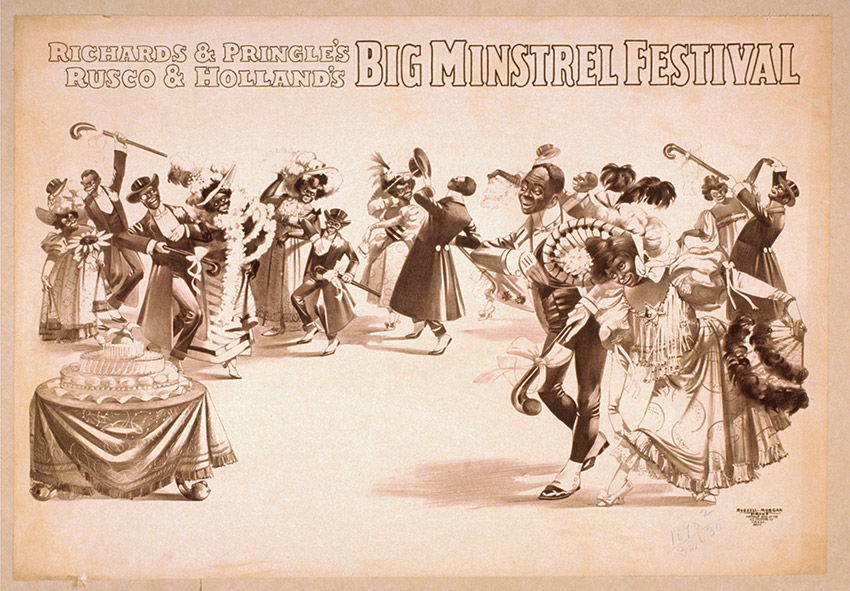
Another social factor, race, has had a major influence in conjunction with gender norms onto women in the theater industry. An example is of minstrelsy which is the form of entertainment associated with minstrel shows (American form of theater developed in the early 19th century), featuring songs, dances, and formulaic comic routines based on stereotyped depictions of African Americans and typically performed by white men with blackened faces. This allowed racial and gendered stereotypes to flourish. It was not common, however, women performed in blackface as well. They typically performed as extremely exaggerated stereotypes. For instance, a light skin woman would be perceived as very sexually promiscuous with an exotic feel. The character had flirtatious and desirable traits, appealing to the male gaze. Although these roles portray stereotypical women, they would have been played by teenage boys as well. Another exaggerated stereotype that women performed as was African American women as submissive servants. This role strengthens the gender norms of putting other’s needs above their own have been forcibly placed onto African American women. This takes away from their identity as human beings and their overall worth.
 |


Comments
Post a Comment